


















Robots flip when they lose traction or balance — usually from trapped air, a debris-heavy filter shifting the weight, worn tracks, or an aggressive climb up a steep wall or step. Purge the air, clean the filter and brushes, and for chronic flippers choose a robot with a low center of gravity and gyroscopic balance.
The most common causes
- Trapped air: the same buoyancy problem that makes robots float can tip them over as one end lifts. Purge air before each run.
- Worn or slick tracks/brushes: no grip on the climb means the robot rolls backward instead of scaling the wall.
- Steep transitions: sharp wall-to-floor angles, steps, and tight coving can pitch a lightweight unit over.
- Uneven load: a filter clogged on one side shifts the balance and encourages a roll.
- Cord drag: a taut, tangled cord can literally yank the unit off balance.
Quick fixes to try first
Purge trapped air, clean the filter so weight is even, inspect and clean the tracks/brushes, and free the cord (add an anti-tangle swivel if needed). These three steps solve most flipping complaints.
The long-term fix
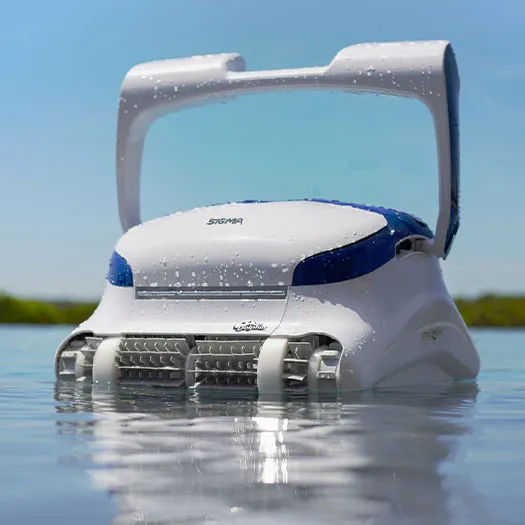
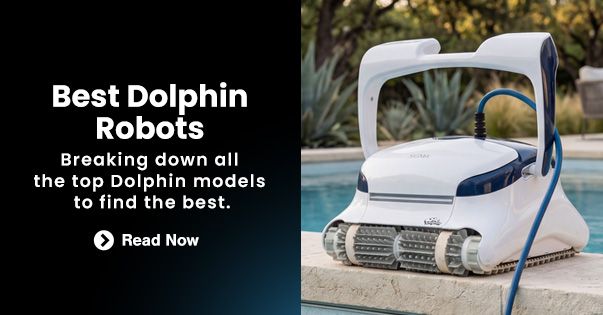
If your robot flips no matter what you do, its design may simply be top-heavy or underpowered for your pool’s shape. Models with a low, balanced chassis and gyroscopic navigation — like the Dolphin Sigma — track walls and transitions in a controlled path and land upright instead of tumbling. Compare balanced, high-traction options on our robotic pool cleaners page.