

















- Free 1-3 Day FedEx Shipping
- 30-Day Trial, No Restocking Fees
- Low Price Guarantee
- Authorized Dealer


Two brushes scrub in both directions and hold more contact on a wall than one, so here is how the dual-brush robots differ and where a second brush stops mattering.
The Quick Answer
The Dolphin Sigma is our top pick because it goes past dual: four scrubbing brushes, backed by three motors and 4,500 GPH. If you want a true two-brush robot for less, take the Premier, whose dual scrubbing brushes get a 3-hour cycle to work with. Single-brush robots are not ranked on this page.
See All 4 PicksShoppers hunting for the best robotic pool cleaner with dual brushes have usually seen what one brush leaves behind: a faint film on the walls, a dull band at the tile line, dirt that stays put while the robot drives over it. Suction only collects what is already loose. A brush is what loosens it, and a second brush means the robot scrubs whichever way it is heading.
Four robots here carry two or more brushes. The Dolphin Quantum spins its pair at twice the speed of standard brushes, and the Clear S puts an active brush at the front and another at the rear. The Dolphin Cayman and Dolphin Escape have one brush each, so we left them out of the ranking and explain that choice further down.
The Dual-Brush Picks in Order
Ranked for this job, with today's price on each. We sell every robot on this list.
-
Top Pick
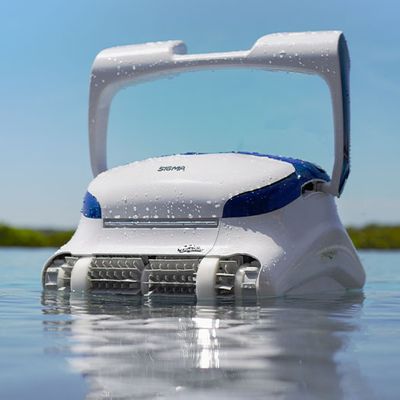

Four Brushes: The Most Scrubbing Contact Here
Dolphin Sigma
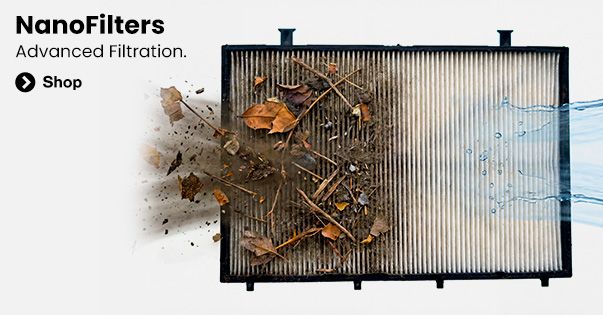
The Sigma is the only robot on this page that goes beyond a pair. Its quad scrubbing brushes put more brush on the surface per pass than any two-brush design here, and three commercial-grade ProLine motors moving 4,500 GPH pull in what they loosen. SmartNav 3.0 with an onboard gyroscope helps keep the passes evenly spaced, which matters because a brush only cleans where the robot actually goes. NanoFilters come in the box for the fine material scrubbing releases, and a 3-year warranty covers it.
- Good Fit
- Buy this if wall film and waterline scum are your standing complaint and price is not the deciding factor.
- Think Twice
- Skip it if budget matters: nothing on this page costs more, and no Dolphin here is heavier, at 24.6 lb.
-
#2
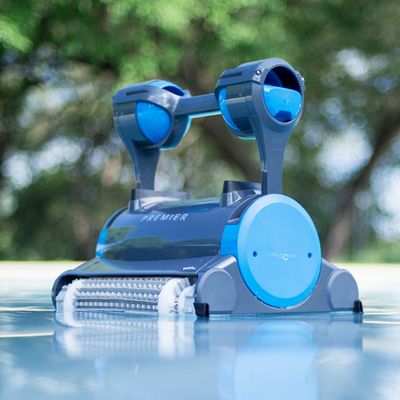
Dual Scrubbing Brushes With the Longest Dolphin Cycle
Dolphin Premier
The Premier is the straightforward dual-brush robot: two scrubbing brushes, dual commercial-grade ProLine motors and 4,500 GPH. What lifts it to second is time on the surface. Its 3-hour cycle is the longest standard cycle of the three Dolphins here, so the brushes make more passes over the floor, walls and waterline before the robot stops. Multi-Media filtration lets you fit NanoFilters after a hand-brushing session to catch the fine material, then go back to standard filters for everyday runs. The warranty runs 3 years.
- Good Fit
- Buy this if you want two-brush scrubbing on a pool up to 50 ft and are happy with controls on the power supply.
- Think Twice
- Skip it if brush speed is your priority: these are standard-speed brushes, and the Quantum's spin twice as fast.
-
#3
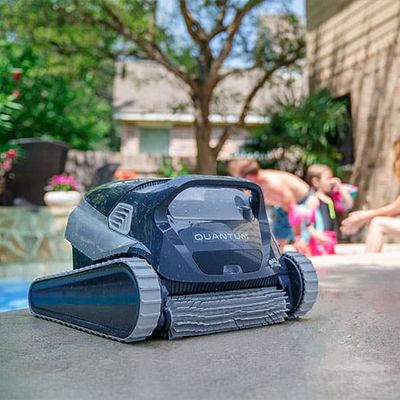
Dual HyperBrush: Two Brushes at Twice the Speed
Dolphin Quantum
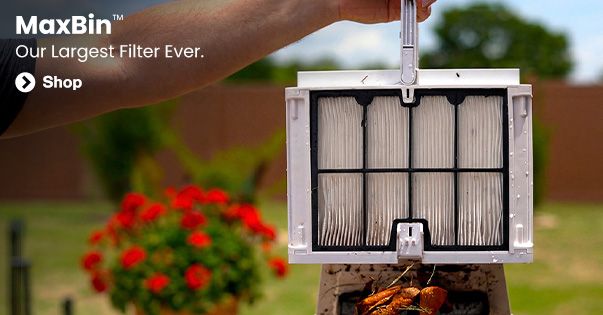
If you rank brushes by speed, the Quantum wins this page outright. Its dual HyperBrush spins at twice the speed of standard brushes, and it carries the pair onto more surfaces than the others: floor, walls, waterline, sun shelves, Baja ledges and stairs. A full set of NanoFilter panels is included with the XXL MaxBin basket. We place it third because a 2-hour cycle and 4,000 GPH give the brushes less time and less flow than the two robots above. It is usually the lowest-priced pick on this page, so check the live price on the card.
- Good Fit
- Buy this if you have a sun shelf, ledges or stairs that need scrubbing, or want the fastest Dolphin brushes for the money.
- Think Twice
- Skip it if a longer warranty matters: coverage is 2 years, against 3 on the other picks.
-
#4
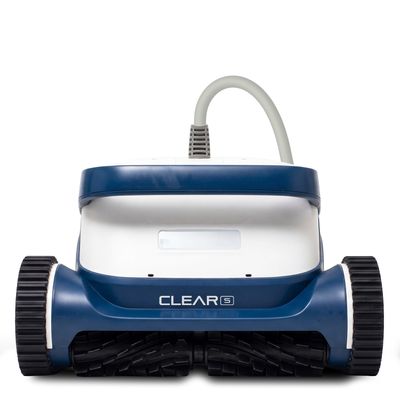
Front and Rear Active Brushes, 8,500+ GPH Behind Them
Clear S
The Clear S has an active scrubbing brush at the front and another at the rear, and it backs them with more published flow than any Dolphin here: 8,500+ GPH from two pump motors. Strong flow helps pull in what the brushes lift, and the 1-micron fine panel holds on to it. Among its six modes is a Waterline only setting that puts every minute of scrubbing on the scum line. It is fourth because its case rests on flow and filtration; on brush count it matches the pairs above instead of beating them.
- Good Fit
- Buy this if you want two active brushes with far higher flow, plus a mode that scrubs only the waterline.
- Think Twice
- Skip it if you want a published brush-speed figure or more than two brushes. The Clear UV has identical brushes and adds a UV-C light, at a higher price.
What to Compare Between Dual-Brush Robots
-
Brush Count and Position
A robot shuttles back and forth across the pool. With a brush at each end, one always leads into the dirt whichever way it travels, and on a wall two brushes give two lines of contact. Count the brushes first: one, two or, on the Sigma, four.
-
Brush Speed
Some brushes turn at about the pace the robot moves. Others are driven faster so they wipe across the surface. Dolphin calls its fast version HyperBrush, at twice the speed of standard brushes. Speed and count are separate advantages, and no pick here leads on both.
-
Where the Brushes Reach
Brushes only help on surfaces the robot covers. All four picks clean the floor, walls and waterline. The Quantum adds sun shelves, Baja ledges and stairs. No robot scrubs into tight corners the way a hand brush does.
-
What Catches the Loosened Dirt
Scrubbing turns film into fine particles in the water around the robot. If the filter is too coarse, they pass straight through and settle again. Check that fine media is included: NanoFilters on the three Dolphins, a 1-micron panel on the Clear S.
Brushes, Flow and Coverage Compared
Published specs for the picks above, with today's price.
| Specification | Dolphin Sigma | Dolphin Premier | Dolphin Quantum | Clear S |
|---|---|---|---|---|
| Price Today | $2349 | $1949 | $1599 | $1749 |
| Cleans | Floor, walls and waterline | Floor, walls and waterline | Floor, walls, waterline, sun shelves and stairs | Floor, walls and waterline |
| Scheduling | Weekly scheduler by day and time | Weekly timer: every day, every 2 days or every 3 days | Weekly timer: every day, every 2 days or every 3 days | Weekly schedules in the Clear app |
| App | myDolphin Plus (Wi-Fi and Bluetooth) | No app; controls on the power supply | myDolphin Plus (Wi-Fi) | Clear app (iOS and Android) |
| Filtration | NanoFilters and standard filter cartridges | Multi-Media: NanoFilters, oversized leaf bag and standard fine filters | XXL MaxBin basket with standard and NanoFilter panels | UltraFilter basket: 1-micron fine and 180-micron coarse panels |
| Brushes | Quad scrubbing brushes | Dual scrubbing brushes | Dual HyperBrush | Front and rear active brushes |
| Navigation | SmartNav 3.0 with gyroscope | SmartNav 2.0 | SmartNav 2.0 | Gyroscope and accelerometer |
| Cable | 55 ft with 360° anti-tangle swivel | 55 ft with 360° anti-tangle swivel | 55 ft with anti-tangle swivel | 59 ft anti-tangle |
| Warranty | 3 years | 3 years | 2 years | 3 years (limited) |
| Shop | Shop the Sigma | Shop the Premier | Shop the Quantum | Shop the Clear S |
What a Brush Does That Suction Cannot
Water flowing into a robot picks up loose material: sand, leaves, settled dust. It slides straight over anything that is attached. Algae starting on a wall, the slick biofilm that makes a surface feel slimy, dirt pressed into plaster texture and the oily band at the waterline all hold on harder than passing water can pull.
A brush breaks that hold mechanically. Once the film is knocked loose it becomes ordinary debris, and the robot's flow carries it into the filter. That is the whole job: the brush converts stuck dirt into something the filter can catch. Two brushes do it on the outbound pass and again on the return, which is the practical argument for paying for the second one.
Why the Single-Brush Robots Are Not Ranked
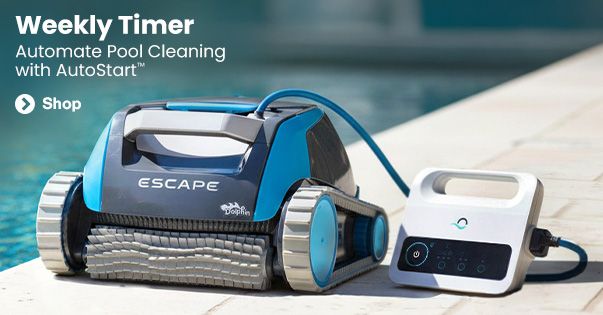
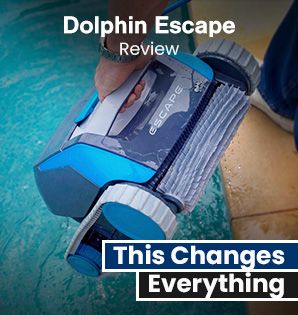
The Dolphin Cayman and Dolphin Escape each have one HyperBrush. It spins at twice the speed of standard Dolphin brushes, so these are not weak scrubbers, but one brush is one brush, and this page is about two. Both clean the floor and walls only, and both are rated for pools up to 33 ft.
If your pool is that size and your budget points there, a single fast brush is a reasonable trade. Buy it knowing what you are trading: no brush at the other end of the robot, and no scrubbing at the tile line. For walls that grow film quickly, step up to one of the four picks.
What Dual Brushes Still Will Not Do
More brushes do not make a robot a substitute for pool care. During an algae treatment you still brush the whole pool by hand, because a robot does not reach into tight corners, behind ladders or around fittings, and those are exactly where algae hangs on. The robot's job comes afterward: collecting what you brushed off.
Brushes also wear. Rough finishes such as pebble take the edge off them sooner than vinyl or fiberglass does. They are replaceable parts, so look at them when you rinse the robot, and replace one that has gone smooth or stopped touching the surface evenly. A worn pair scrubs worse than one good brush.
How to Get Full Value From Two Brushes
- Brush corners, steps and the area behind the ladder by hand first, then run the robot so it collects what you loosened.
- Fit the finest filters you have after hand brushing or an algae treatment, and rinse them straight after the cycle.
- Hold the water level steady. The waterline pass works on the scum line only if the water sits where it usually does.
- Check both brushes each month for hair wound around the ends, and compare the wear on one against the other.
Dual Brush Questions
Is a robotic pool cleaner with dual brushes really better than one with a single brush?
For scrubbing, yes. A second brush means there is always a brush leading whichever way the robot travels, and two lines of contact on a wall. Whether you need it depends on your water. A pool that only collects leaves and sand will be cleaned just as well by a single-brush robot with good flow.
Will two brushes damage a vinyl liner or fiberglass?
The three Dolphins on this page all list vinyl liner and fiberglass among their published surfaces. For the Clear S, confirm your surface on its product page or in the manual before you buy. On any soft surface, rinse the robot regularly, since grit trapped in a brush is what causes scuffs.
What is the difference between dual brushes and quad brushes?
Count. A dual-brush robot has two brushes, typically one at each end. The Sigma has four scrubbing brushes, so more brush touches the surface on every pass. Quad does not mean faster: the Quantum's two HyperBrushes spin at twice standard speed, while the Sigma relies on having more of them.
Do I still have to brush the pool by hand?
Yes, though far less often. A robot handles the open floor, the walls and, on these four picks, the waterline. Hand brushing is still needed in tight corners, around fittings and during any algae treatment. Think of the robot as taking over the routine scrubbing, not retiring the brush.
How long do robot brushes last?
It depends on the finish and how often the robot runs, so we will not put a number on it. Rough surfaces wear brushes faster than smooth ones. The signs are easy to spot: the brush has gone smooth, or it no longer touches the floor across its full width. A worn brush can be replaced.
Still have questions? Browse our pool robot troubleshooting guides, contact our pool experts, or call (888) 615-5728

Which Dual-Brush Robot to Buy
Decide what you want more of. More brushes: the Sigma, with four. More time scrubbing per cycle: the Premier. More speed, and brushes on ledges and stairs: the Quantum. More flow behind two active brushes: the Clear S. If film on the walls is not your problem in the first place, you do not need a second brush at all, and a single-brush model will cost you less. Every order ships free by FedEx in 1-3 days.

