
















- Free 1-3 Day FedEx Shipping
- 30-Day Trial, No Restocking Fees
- Low Price Guarantee
- Authorized Dealer


No robot is published as approved for natural swimming pools, so this guide covers what one can do in the lined swimming zone and where it must never go.
Read This First
No robot on this page is published as approved for natural swimming pools. In practice a robot can clean the lined swimming zone, but it must stay out of the planted regeneration zone, gravel beds and any loose substrate. Check with your pool's builder before you run one.
The Quick Answer
With the builder's blessing, the best robotic pool cleaner for natural pools is the Dolphin Premier: NanoFilters for fine sediment, an oversized leaf bag for litter, and a timer for the frequent runs biofilm demands. The Clear S is the runner-up, with 1-micron panels and a Floor only mode. Both belong in the lined swimming zone only, never among the plants.
See All 5 PicksA natural swimming pool cleans its water with plants and biology instead of chlorine. A regeneration zone of gravel and aquatic plants does the filtering, and the swimming zone beside it is usually lined with EPDM or PVC, or built in concrete. No sanitizer means the swimming zone grows a slippery biofilm quickly and collects fine sediment and leaf litter on the floor.
People ask us about robots for natural pools because vacuuming that sediment by hand is a chore. In practice a robot can clean the lined swimming zone, and the Dolphin Sigma, the Dolphin Quantum and the Dolphin Cayman can do that job alongside our top two. But none carries a published approval, and the job comes with rules.
Our Top Picks for the Swimming Zone
Ranked for this job, with today's price on each. We sell every robot on this list.
-
Top Pick

Best Filter Range for Sediment and Leaf Litter
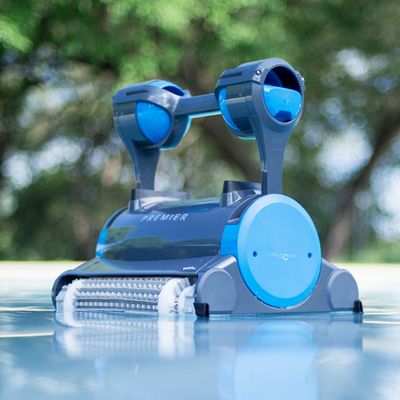
Dolphin Premier
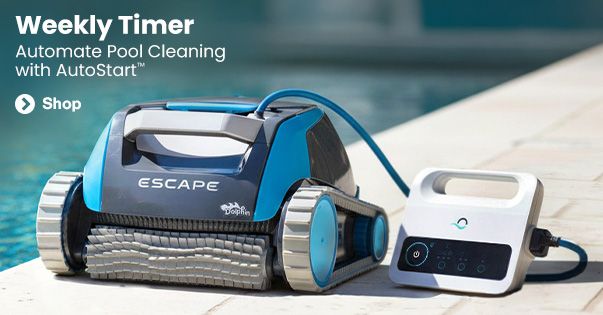
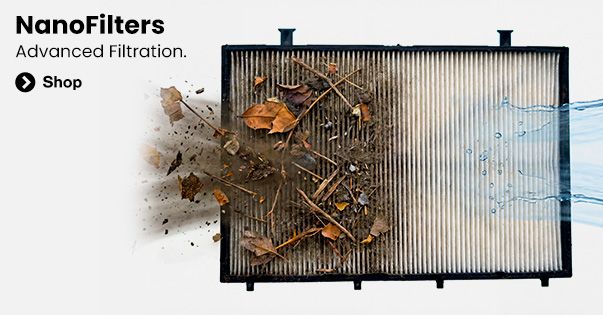
The Premier leads because a natural pool throws two opposite kinds of debris at a robot, and its Multi-Media system is built for both. NanoFilters take the fine sediment; the oversized leaf bag takes the litter that pond-side planting sheds; you swap between them in seconds with no tools. The weekly timer on the power supply runs it every day, every 2 days or every 3 days, the cadence biofilm needs, with nothing electronic to pair. Dual brushes scrub floor, walls and waterline.
- Good Fit
- Buy this if your swimming zone gets both silt and leaves and you want set-and-forget scheduling with no phone involved.
- Think Twice
- Skip this if the dividing wall sits below the surface; it climbs walls as part of its cycle, and no floor-only setting is published for it.
-
#2
Floor-Only Mode and 1-Micron Panels
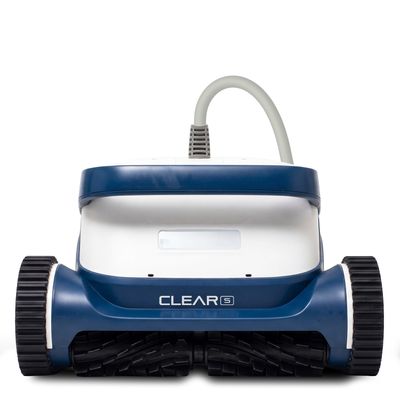
Clear S
The Clear S is the runner-up for two specific reasons. First, its UltraFilter basket has 1-micron fine panels for sediment and 180-micron coarse panels for litter. Second, it has a Floor only mode, which matters where a dividing wall stops below the surface, and manual joystick driving in the Clear app lets you steer it away from a boundary yourself. Flow is 8,500+ GPH, and Fast mode runs one hour for a quick daily pass. Its published working depth is 2.5 to 16.4 ft.
- Good Fit
- Buy this if your swimming zone meets the plants at a submerged wall and you want control over where the robot goes.
- Think Twice
- Skip this if the zone is shallower than 2.5 ft. Clear UV is the same robot with a UV-C light at a higher price; we would stay with the S.
-
#3
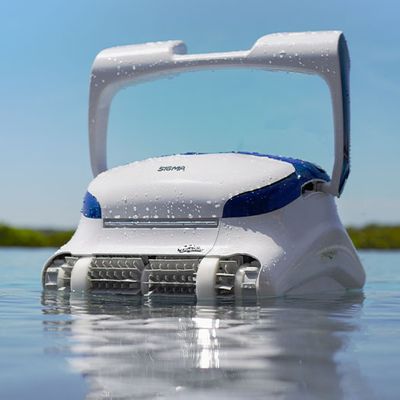
Hardest Scrub on Biofilm
Dolphin Sigma
Biofilm is a scrubbing problem, and the Sigma brings the most scrubbing: quad brushes on floor, walls and waterline, driven by three ProLine motors. NanoFilters come in the box for the sediment. Its weekly scheduler picks days and times in the app, so you can run it early, before swimmers stir the water, as often as the walls need. The gyroscope in SmartNav 3.0 keeps coverage even in the irregular shapes natural pools favor. It sits third on price, and we list no floor-only mode for it.
- Good Fit
- Buy this if slippery walls are the main complaint and the swimming zone has full-height walls on every side.
- Think Twice
- Skip this if a submerged wall borders the plants, or the highest price here is hard to justify.
-
#4
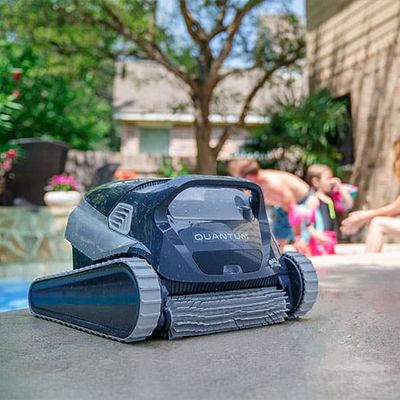
Big Basket for Litter, Fine Panels Included
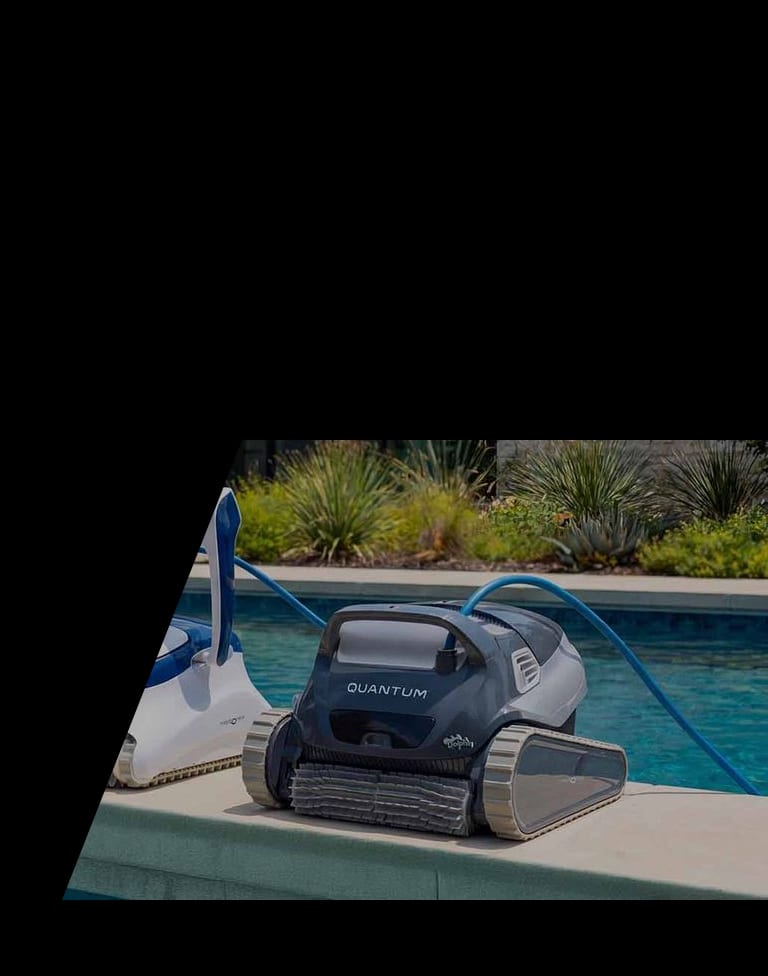
Dolphin Quantum
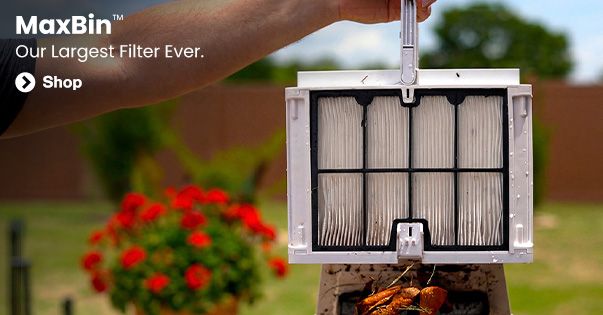
The Quantum suits a natural pool that sits among trees and grasses. Its XXL MaxBin, at over 400 square inches of filter area, has room for leaves, seed heads and reed fragments, and a full set of NanoFilter panels is included for the sediment underneath. The timer on the power supply runs it every day, every 2 days or every 3 days. It is also the lowest-priced 50 ft robot in this guide, which is a fair hedge when no robot carries an approval for this kind of pool.
- Good Fit
- Buy this if leaf litter is heavy and you want fine panels in the box at a lower outlay.
- Think Twice
- Skip this if warranty length matters; it carries 2 years, and ask us how any warranty treats an unchlorinated pool.
-
#5
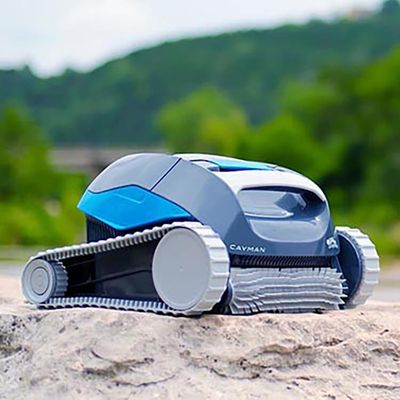

Daily Runs for Swim Zones up to 33 ft
Dolphin Cayman
Many natural pools have a modest swimming zone, and for one of 33 ft or less the Cayman makes sense. Its timer has one setting, every day, and daily is what biofilm calls for. One HyperBrush at twice the speed of a standard Dolphin brush scrubs floor and walls, and the MaxBin basket handles litter. For sediment you will want the optional NanoFilter panels. It climbs walls as part of its cycle, so check the dividing wall first.
- Good Fit
- Buy this if the swimming zone is small and you want an inexpensive robot running every day.
- Think Twice
- Skip this if the zone is longer than 33 ft or you want the film at the surface line scrubbed; it does floor and walls only.

What Matters in a Natural Pool
-
Fine Filtration for Sediment
The floor of a natural pool gathers a soft, fine sediment that coarse panels can pass straight back into the water. NanoFilters are included with the Premier, Sigma and Quantum; the Clear S has 1-micron fine panels; on the Cayman, NanoFilter panels are an optional add-on.
-
Frequent, Scheduled Runs
With no chlorine, biofilm returns to the walls and floor within days, so short gaps between cycles matter. The Premier and Quantum have timers on the power supply, the Sigma and Clear S schedule weekly from their apps, and the Cayman's timer runs every day.
-
Staying in the Swimming Zone
The robot belongs on liner or concrete only. Gravel and loose substrate can jam a robot, and a robot would tear up a planting bed. If the wall between zones stops below the surface, a wall-climbing robot could go over it, so a floor-only mode or close supervision matters.
-
Nothing Carried In
A natural pool has no tolerance for pool chemicals. A robot that has ever been in a chlorinated pool, or was rinsed with treated water, must be washed thoroughly in clean water before it goes in. Rinse a new robot too.
Filtration, Scheduling and Reach Compared
Published specs for the picks above, with today's price.
| Specification | Dolphin Premier | Clear S | Dolphin Sigma | Dolphin Quantum | Dolphin Cayman |
|---|---|---|---|---|---|
| Price Today | $1949 | $1749 | $2349 | $1599 | $1049 |
| Pool type | In-ground | In-ground | In-ground | In-ground | In-ground and above-ground |
| Pool length | Up to 50 ft | Up to 50 ft | Up to 50 ft | Up to 50 ft | Up to 33 ft |
| Cleans | Floor, walls and waterline | Floor, walls and waterline | Floor, walls and waterline | Floor, walls, waterline, sun shelves and stairs | Floor and walls |
| Cable | 55 ft with 360° anti-tangle swivel | 59 ft anti-tangle | 55 ft with 360° anti-tangle swivel | 55 ft with anti-tangle swivel | 50 ft |
| Filtration | Multi-Media: NanoFilters, oversized leaf bag and standard fine filters | UltraFilter basket: 1-micron fine and 180-micron coarse panels | NanoFilters and standard filter cartridges | XXL MaxBin basket with standard and NanoFilter panels | MaxBin basket with fine panels; NanoFilter panels optional |
| Robot weight | 20.3 lb | — | 24.6 lb | 18.3 lb | 14.6 lb |
| Warranty | 3 years | 3 years (limited) | 3 years | 2 years | 2 years |
| Shop | Shop the Premier | Shop the Clear S | Shop the Sigma | Shop the Quantum | Shop the Cayman |
Where a Robot Can Work, and Where It Cannot
Think of a natural pool as two pools. The swimming zone has a smooth, continuous surface: EPDM or PVC liner, or concrete. A robot can drive on that and pick up sediment, biofilm and leaf litter. Vinyl liner, which is PVC, is on the published surface list of every Dolphin here. EPDM rubber is not on any.
The regeneration zone is off limits. Gravel and loose substrate get pulled into the intake, and the robot would churn the planting bed that cleans your water. If loose gravel has migrated onto the swim-zone floor, pick it out by hand before a cycle.
Keeping the Robot Out of the Planted Zone
How the two zones are divided decides how careful you need to be. A full-height wall that breaks the surface contains any robot. A wall that stops a few inches under the water, common because it lets water flow across, can be climbed over by a robot that scrubs to the waterline. In that pool, use the Clear S in Floor only mode, or run any other robot only while you are there to watch it. Never leave a wall-climbing robot on a schedule beside a submerged boundary.
Biology First: Washing, Wildlife and What Comes Out
Wash the robot, cable and filters in clean, untreated water before first use, and again if it has been near a chlorinated pool. Empty the filter well away from the water, at least weekly and ideally after each run; that sludge is the nutrient load you are trying to remove, and it belongs on the compost heap. And check the basket for small pond life, such as tadpoles and insect larvae, which can be drawn in with debris. A robot removes what has settled. It does not replace the regeneration zone.
Before You Run a Robot in a Natural Pool
- Ask the builder first, and ask specifically about the liner material and the dividing wall.
- Run the first cycle supervised and watch where the robot climbs before you ever set a schedule.
- Net out large leaves and pick up stray gravel beforehand, so the fine filters are left for sediment.
- Unheated natural pools run cold in spring and fall. Check the manual's water temperature range before early or late-season runs.
Natural Pool Questions
Is any robotic pool cleaner approved for natural swimming pools?
None of the robots in this guide is published as approved for them. That is why even our best robotic pool cleaner for natural pools comes with conditions: use it only in the lined swimming zone, keep it out of the plants and gravel, wash it first, and clear it with your builder.
Can a pool robot go in the regeneration zone?
No. Gravel and loose substrate will be drawn into the robot, and its tracks and brushes would disturb the roots and the biological layer that clean the water. Keep it on liner or concrete. If the zones share a submerged wall, use a floor-only mode or supervise the cycle.
Will a robot work on an EPDM liner?
We cannot point to a published approval. Vinyl liner, which is PVC, is on the Dolphin surface lists; EPDM rubber is not listed for any robot here. A smooth, well-fitted EPDM floor may behave much the same, but folds and seams vary, so ask the builder first.
How often should a robot run in a natural pool?
Often. Without chlorine, biofilm is back on the walls within days and sediment settles constantly. A cycle every day or two keeps both in check far better than a weekly deep clean. Wash the filter frequently as well, since the debris is organic and breaks down fast.
Still have questions? Browse our pool robot troubleshooting guides, contact our pool experts, or call (888) 615-5728

Our Honest Recommendation
Start with the builder, not the shopping cart. If they are comfortable with a robot in the swimming zone, choose the Premier for its range of filters and simple timer, or the Clear S if a submerged dividing wall makes Floor only mode worth having. The Sigma scrubs hardest, the Quantum holds the most litter, and the Cayman suits small zones. If the builder says no, or the floor is gravel, no robot here is the answer. Unsure? Ask our pool experts before you order.

