




















- Free 1-3 Day FedEx Shipping
- 30-Day Trial, No Restocking Fees
- Low Price Guarantee
- Authorized Dealer


Glass tile is the slickest surface a robot meets and the costliest to damage. Here is what brushes do to it and which robots have the best odds on the walls.
Read This First
None of these robots publishes glass tile as a named surface; the Dolphins list tile. Their soft brushes do not scratch glass in normal use, but glass is slick, and no robot is certain to climb it. Expect a clean floor, treat wall and waterline cleaning as likely but unproven until you run a test cycle, and ask us about brush options first.
The Quick Answer
Our first pick for glass tile is the Dolphin Premier: dual scrubbing brushes, HyperGrip tracks, waterline cleaning and a price below the Sigma's. The Dolphin Sigma is the runner-up, with four brushes for the most contact. The Dolphin Quantum, the Clear S and, under 33 ft, the Dolphin Cayman follow. Run a test cycle before you rely on any of them.
See All 5 PicksShopping for the best robotic pool cleaner for glass tile pools usually starts with a fear and ends with a surprise. The fear is scratching: a glass-tiled pool is among the most expensive finishes there is. The surprise is that scratching is the smaller risk. Robot brushes are soft PVC, softer than glass, and in normal use they do not mark it.
The real question is grip. Glass tile is the slickest surface a pool robot meets, and the upper wall is where traction is least certain. A robot may clean the floor perfectly and still slide back before it reaches the waterline. No model is immune, so this page ranks the robots with the best odds and shows you how to test.
Our Picks for Glass Tile, in Order of Wall Odds and Value
Ranked for this job, with today's price on each. We sell every robot on this list.
-
Top Pick

Best Odds for the Money on Slick Tile
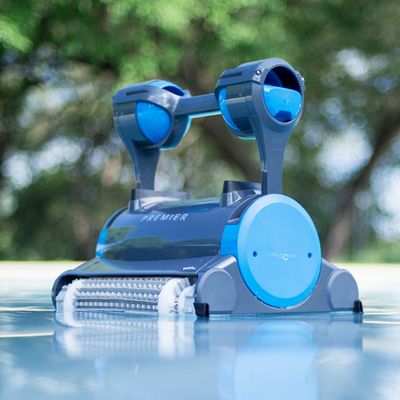
Dolphin Premier
No robot comes with a promise on glass, so we start with the one that offers strong wall hardware without the top price. The Premier has dual scrubbing brushes, HyperGrip tracks and dual commercial-grade ProLine motors pulling 4,500 GPH, and strong suction helps press a robot to the wall. It is built to scrub the waterline, tile is on its published surface list, and the included NanoFilters capture the fine grit you least want sitting on glass. The 3-hour cycle and 3-year warranty round it out.
- Good Fit
- Buy this if you want waterline-capable hardware and fine filtration without paying for the Sigma.
- Think Twice
- Skip it if you need certainty on the walls. No robot offers that on glass, so watch the first cycles.
-
#2
Most Brush Contact on the Wall
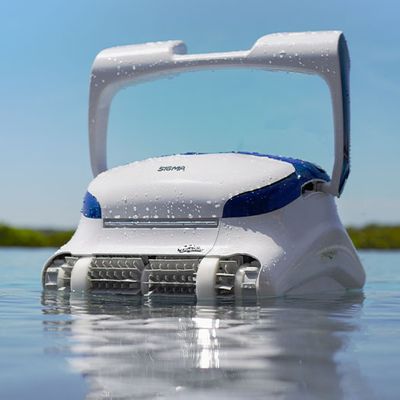
Dolphin Sigma
If any robot here is going to hold a glass wall, the Sigma has the most going for it. Four scrubbing brushes put more soft PVC against the tile than any dual-brush machine, three commercial-grade ProLine motors move 4,500 GPH, and SmartNav 3.0 adds an onboard gyroscope. Tile is on its surface list and it scrubs the waterline. It is second, not first, because it is the highest-priced robot in this guide, and on glass you are paying for better odds, not a sure thing.
- Good Fit
- Buy this if the pool is fully tiled in glass and you want the maximum brush contact available.
- Think Twice
- Skip it if the price only makes sense with a promise attached. We cannot give one for glass walls.
-
#3
Fast Brushes, Lower Price, Ledges Included
Dolphin Quantum
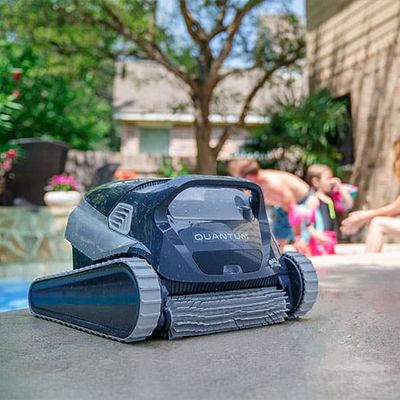
Of the picks here, the Quantum is the least expensive way to get waterline cleaning, tracks and two active brushes onto glass tile. Its HyperBrushes spin at twice the speed of standard brushes, it rides on HyperGrip continuous rubber tracks, and tile is on its published surface list. Glass-tiled pools tend to be design-led, with sun shelves, Baja ledges and tiled stairs, and those are all on the Quantum's cleaning list. The myDolphin Plus app lets you start and stop a cycle from your phone.
- Good Fit
- Buy this if your glass tile pool has a shelf or tiled steps and you want waterline cleaning for less.
- Think Twice
- Skip it if you want the longest warranty. The Quantum's is 2 years, and two fast brushes are still only two.
-
#4
Floor-Only Mode if the Walls Say No
Clear S
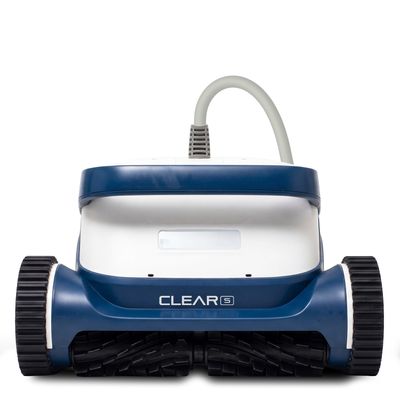
The Clear S brings something useful to an uncertain surface: choice. Among its six modes are Floor only and Waterline only, so if your tile turns out too slick for a reliable climb, you can stop the robot spending its cycle sliding and have it clean the floor properly instead. When the walls do cooperate, front and rear active scrubbing brushes and 8,500+ GPH of flow do the work, and a 1-micron fine panel catches the fine grit.
- Good Fit
- Buy this if you want a fallback: a robot that can be told to skip walls it cannot hold.
- Think Twice
- Skip it if you expect modes to add grip. Floor only is a workaround for slick walls, not a cure.
-
#5

Small Glass Tile Pools, Floor First
Dolphin Cayman
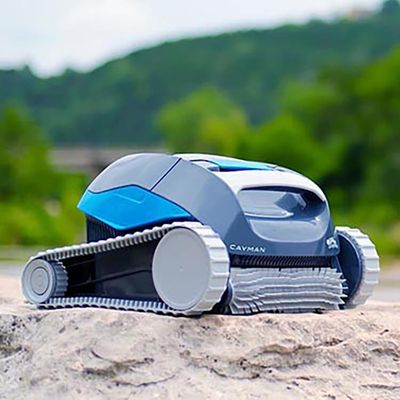
Glass tile often shows up in small pools: plunge pools, spools and courtyard designs under 33 ft. The Cayman suits that size, lists tile among its surfaces, and scrubs the floor and walls with a HyperBrush spinning at twice the speed of standard Dolphin brushes on HyperGrip tracks. At 14.6 lb it is easy to lift out and rinse after each run, a habit that matters on glass. With one brush, treat wall cleaning as a bonus and floor cleaning as the reason to buy.
- Good Fit
- Buy this if your glass tile pool is under 33 ft and a spotless floor is the priority.
- Think Twice
- Skip it if the tile line is what bothers you. It stops below the tile line, and it has one brush, not two.

What Decides It on Glass Tile
-
Brush Contact and Traction
Climbing a slick wall comes down to how much brush and track is touching it. The Sigma has four scrubbing brushes, the Premier and Quantum two, and every Dolphin here drives on HyperGrip tracks. More contact improves the odds. It does not make them certain.
-
Clean Brushes, Not Hard Brushes
The brush will not scratch glass. A grain of sand trapped in the brush could. That makes rinsing the brushes and the filter part of protecting the tile, not just part of upkeep.
-
Waterline Capability
Glass tile shows every water spot and scum line, so most owners want the tile line scrubbed. The Premier, Sigma, Quantum and Clear S are built to do it. The Cayman cleans floor and walls only.
-
A Way Back if the Walls Defeat It
Because the outcome depends on your tile, buy where a test is possible. We offer a 30-day trial with no restocking fees, which is long enough to watch several cycles and decide.
Glass Tile Picks Compared: Brushes, Tracks and Waterline
Published specs for the picks above, with today's price.
| Specification | Dolphin Premier | Dolphin Sigma | Dolphin Quantum | Clear S | Dolphin Cayman |
|---|---|---|---|---|---|
| Price Today | $1949 | $2349 | $1599 | $1749 | $1049 |
| Brushes | Dual scrubbing brushes | Quad scrubbing brushes | Dual HyperBrush | Front and rear active brushes | HyperBrush |
| Cleans | Floor, walls and waterline | Floor, walls and waterline | Floor, walls, waterline, sun shelves and stairs | Floor, walls and waterline | Floor and walls |
| Traction | HyperGrip tracks | HyperGrip tracks | HyperGrip tracks | — | HyperGrip tracks |
| Pool length | Up to 50 ft | Up to 50 ft | Up to 50 ft | Up to 50 ft | Up to 33 ft |
| Filtration | Multi-Media: NanoFilters, oversized leaf bag and standard fine filters | NanoFilters and standard filter cartridges | XXL MaxBin basket with standard and NanoFilter panels | UltraFilter basket: 1-micron fine and 180-micron coarse panels | MaxBin basket with fine panels; NanoFilter panels optional |
| Robot weight | 20.3 lb | 24.6 lb | 18.3 lb | — | 14.6 lb |
| Warranty | 3 years | 3 years | 2 years | 3 years (limited) | 2 years |
| Shop | Shop the Premier | Shop the Sigma | Shop the Quantum | Shop the Clear S | Shop the Cayman |
Will a Robot Scratch Glass Tile? The Grit Question
The Dolphins' brushes are soft PVC, far softer than glass, and their tracks are rubber. In normal use, neither marks the tile. What can scratch glass is hard grit: sand or fine gravel caught between a moving part and the surface.
So the protection is housekeeping. Rinse the brushes and tracks when you empty the filter. Do not drag the robot across a sandy deck and drop it straight in. Scoop out spilled gravel or a broken tile chip before a cycle. And if a brush ever feels gritty or hardened, replace it.
How to Run a Test Cycle, and What to Watch
Before you trust a robot on glass, watch it. Run the first cycle in daylight and stay for the wall phase. You are looking for three things: does it leave the floor and start up the wall, does it reach the waterline, and does it come down under control or slide?
One slip means nothing. Repeated sliding from the same height shows you where your tile's limit is. Check raised mosaic or trim pieces too, since a proud edge can snag a brush. If you see anything you do not like, stop and call us.
If It Slips on the Upper Wall
Slipping high on the wall has a short list of causes. A full filter cuts the suction that helps hold the robot in place, so empty it first. Worn or dirty brushes grip less. A film of algae or sunscreen makes glass slicker still. If none of that is the answer, ask our pool experts about brush options for slick surfaces before you give up on the walls.
We left two robots off this list. The Escape lists tile but, like the Cayman, has one brush and no waterline cleaning. The Clear UV is the same robot as the Clear S plus a built-in UV-C light you control from the app, and it costs more.
Glass Tile Setup Checklist
- Hose off the brushes and tracks before the robot goes in, every time. Grit carried in from the deck is the only realistic scratch risk.
- Empty the filter before a wall-cleaning cycle. Full suction gives the robot its best grip on slick tile.
- Watch the first two or three cycles through the wall phase before trusting a schedule.
- Wipe the tile line by hand weekly if the robot stops short of it. Glass shows a scum line quickly.
Glass Tile Pool Robot Questions
Will a robotic pool cleaner scratch glass tile?
Not in normal use. Robot brushes are soft PVC, softer than glass. The risk is hard grit trapped under a brush, so rinse the brushes regularly and keep sand out of the pool. That is true of the best robotic pool cleaner for glass tile pools and the cheapest alike.
Why does my robot slide back down a glass tile wall?
Because glass offers less friction than any other pool surface. Robots hold a wall with brush and track contact plus suction, and all three are weaker on slick, wet glass. A full filter, worn brushes or a film on the tile makes it worse.
Do these robots list glass tile as a supported surface?
No. None of them publishes glass tile by name. The Dolphin Premier, Sigma, Quantum and Cayman list tile in general, without separating ceramic, porcelain and glass, and glass is the slickest of the three. That is why we recommend a test cycle and a call to us before you buy.
Can a robot clean the grout between glass tiles?
It brushes across grout on every pass and removes loose dirt and early algae from the joints. It will not restore stained or eroded grout. On small mosaic tile, where grout lines are everywhere, expect to brush problem areas yourself now and then.
Still have questions? Browse our pool robot troubleshooting guides, contact our pool experts, or call (888) 615-5728

Our Honest Recommendation for Glass Tile
Buy for the odds, then test. The Premier gives you waterline-capable hardware and fine filtration, and the Sigma adds two more brushes if you want every advantage. The Quantum suits tiled shelves and steps, the Clear S can switch to floor only if the walls refuse, and the Cayman covers small pools. Keep the brushes free of grit, watch the first cycles, and use the trial period to decide. A robot that only cleans your floor is still worth having; just know that before you pay.

