














- Free 1-3 Day FedEx Shipping
- 30-Day Trial, No Restocking Fees
- Low Price Guarantee
- Authorized Dealer


The shock did its job and left a pale dust on the floor. Getting it out takes ultra-fine filters, settled water and a few rinse-and-repeat cycles.
The Quick Answer
The Dolphin Premier is our top pick for dead algae: NanoFilters are included, the filters come out of the top for the repeated rinsing this job needs, and a light on the power supply shows when they are full. The Clear S is the strong alternative, with 1-micron panels and a one-hour Fast mode for quick re-runs.
See All 5 PicksDead algae is what a successful shock leaves behind: a gray-white or tan dust on the floor that billows into a cloud the moment a brush or a foot touches it. It is among the finest debris a pool ever holds, which is why it defeats ordinary robot filters and why it seems to come back after every vacuum. It has not come back. It went through the filter and settled again.
So the best robotic pool cleaner for dead algae is one with NanoFilter-class media in the box: the Premier and Clear S first, then the Dolphin Sigma, Dolphin Quantum and Clear UV. Two cautions before the picks. The robot goes in only after chlorine has dropped back to its normal range. And a robot clears dead algae; it does not treat live algae or stand in for sanitizer.
Our Dead-Algae Picks, Ranked
Ranked for this job, with today's price on each. We sell every robot on this list.
-
Top Pick
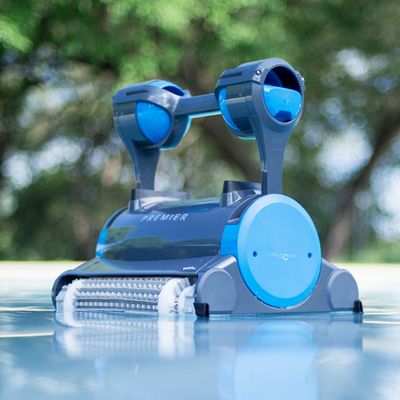

Easiest to Rinse and Re-Run
Dolphin Premier
Clearing dead algae is a loop: run, rinse, run again. The Premier makes the loop painless. The NanoFilters it ships with lift out of the top with no tools, the power supply's full-filter indicator flags when the dust has loaded them, and it can be back in the water within minutes. Dual scrubbing brushes work the walls and waterline where the algae grew. When the pool is clear again, the standard filters and leaf bag from the same Multi-Media set take over for everyday debris. The warranty is 3 years.
- Good Fit
- Buy this if blooms are a once-or-twice-a-year event and you want the cleanup to be quick and obvious.
- Think Twice
- Skip this if you want to launch and monitor cycles from your phone. Its timer and indicator are on the power supply only.
-
#2
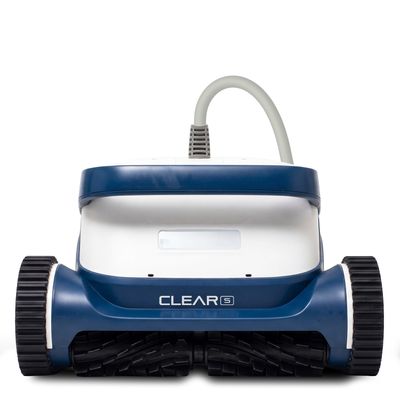
One-Hour Cycles to Match a Fast-Filling Filter
Clear S
Dead algae fills a fine filter long before a normal cycle is over, and the Clear S is the pick that lets you match the cycle to the filter. Fast mode runs 1 hour: run, rinse, run again. When the bulk is out, switch to Ultra mode for 3 hours across the floor, walls and waterline. The fine panels are rated at 1 micron, with 8,500+ GPH behind them, and front and rear active brushes loosen the pale film. The Clear app also shows live pool temperature, worth watching since algae trouble tends to follow warm water.
- Good Fit
- Buy this if you want short cycles for the heavy first day and a stated 1-micron rating.
- Think Twice
- Skip this if you would rather not use an app. Its weekly schedules and joystick driving are run from one.
-
#3
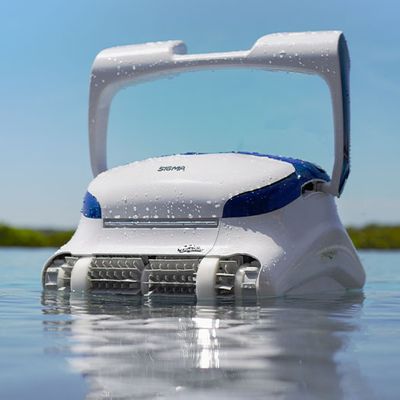
Scrubs the Walls Where the Algae Grew
Dolphin Sigma
A shock leaves two things: dust on the floor and a dead film still stuck to the walls. The Sigma is the strongest pick for the second. Quad scrubbing brushes work every wall and the waterline, and three ProLine motors pull the loosened residue through the included NanoFilters at 4,500 GPH. With dead algae the filter alert in the myDolphin Plus app earns its keep, because it tells you the cartridges are loaded when it happens, not an hour later. Afterward, a daily slot on the weekly scheduler keeps the walls brushed while your chemistry settles.
- Good Fit
- Buy this if the bloom was on the walls as much as the floor and you want alerts on your phone.
- Think Twice
- Skip this if cost matters most. It carries the highest price of the five, and its cartridges need a careful rinse.
-
#4
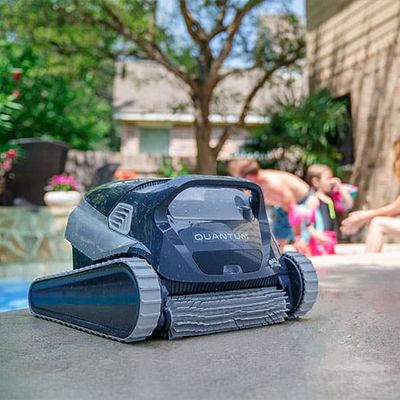
Biggest Dolphin Filter for a Fast-Loading Mess
Dolphin Quantum
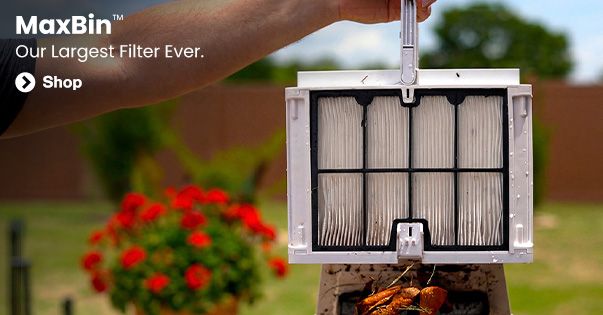
Dead algae clogs a filter by coating its surface, so surface is what you want more of. The Quantum's included NanoFilter panels sit in an XXL MaxBin with over 400 square inches of area, the largest filter area of the Dolphins here, which stretches the time between rinses when the floor is thick with dust. One click opens the basket from the top. It also reaches stairs, sun shelves and Baja ledges, shallow spots where residue settles and the other picks are not rated to clean. The app sends alerts and schedules the follow-up runs.
- Good Fit
- Buy this if residue sits on your steps and shelf, or you want the most published filter area for the money.
- Think Twice
- Skip this if you want a 3-year warranty. The other four picks have one; this has 2.
-
#5
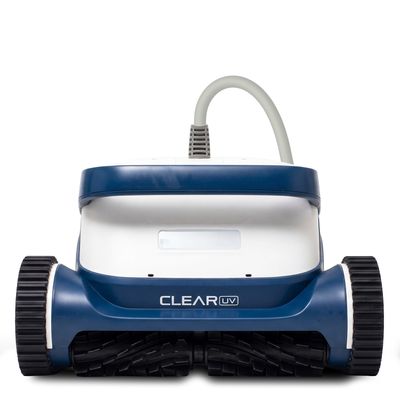
Same Cleanup as the Clear S, Plus a Light
Clear UV
For dead algae the Clear UV does exactly what the Clear S does, with the same 1-micron fine panels, 8,500+ GPH flow, Fast and Ultra modes and 3-year limited warranty. It adds a built-in UV-C light that you control from the app, and it costs more. We sell this robot as a cleaner with a light on it. We make no claim that the light treats or prevents algae; chlorine and brushing are still what deal with a bloom. As a dead-algae cleaner it ties the Clear S at a higher price, so it is fifth.
- Good Fit
- Buy this if you want the light for your own reasons and need post-shock dust cleared too.
- Think Twice
- Skip this if you are buying it to fix an algae problem. That is a chemistry job, and the Clear S cleans up the same for less.
What Decides a Dead-Algae Cleanup
-
NanoFilter-Class Media
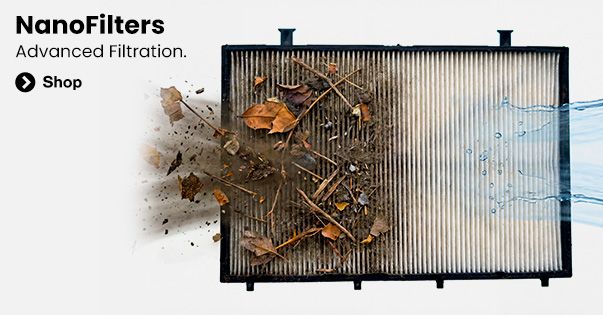
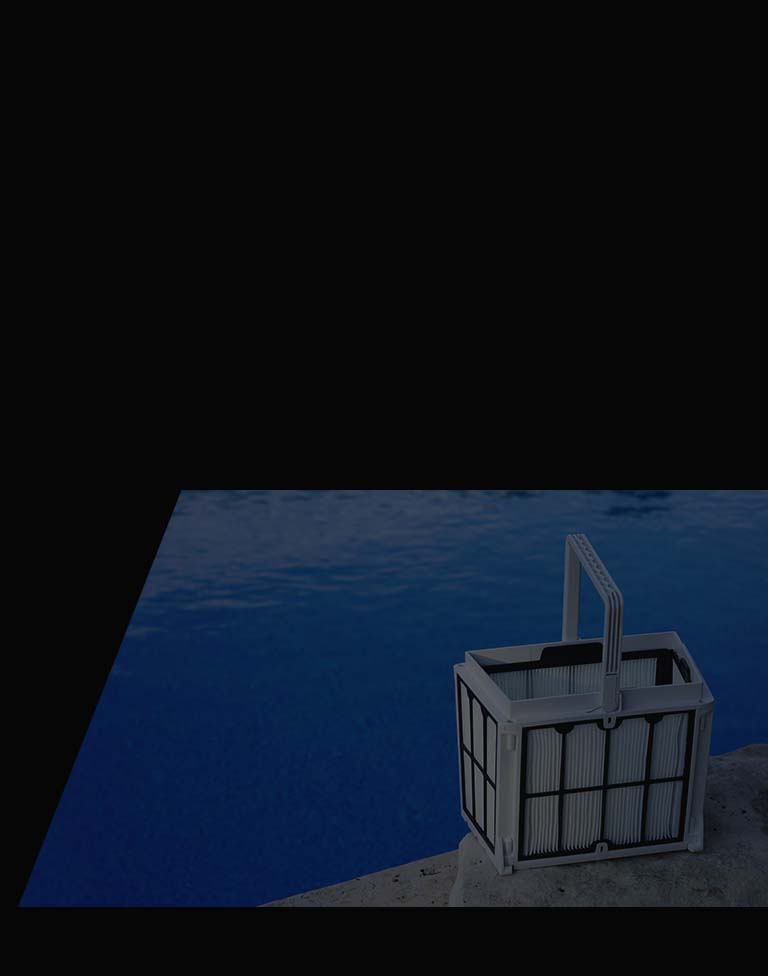
Dead algae particles are fine enough to pass through standard robot panels, and often the pool's own filter too. Only ultra-fine media holds them: NanoFilters, NanoFilter panels or 1-micron panels. This is the one spec that cannot be compromised on this page.
-
Rinsing Without a Fight
This debris loads a filter fast. On a bad cleanup you may rinse two or three times in a day. Filters that lift out of the top without tools and hose clean quickly are worth more here than any motor figure.
-
Knowing When the Filter Is Full
A blinded filter stops collecting but the robot keeps driving, so you lose an hour without knowing it. A full-filter light or an app alert tells you when to pull and rinse. Without one, check at the halfway point.
-
Walls and Waterline
Algae dies where it grew, and much of it grew on the walls. Brushing knocks the residue to the floor, and a robot that scrubs walls and waterline keeps doing that brushing for you in the days after the treatment.
Filtration and Scrubbing Compared
Published specs for the picks above, with today's price.
| Specification | Dolphin Premier | Clear S | Dolphin Sigma | Dolphin Quantum | Clear UV |
|---|---|---|---|---|---|
| Price Today | $1949 | $1749 | $2349 | $1599 | $1999 |
| Filtration | Multi-Media: NanoFilters, oversized leaf bag and standard fine filters | UltraFilter basket: 1-micron fine and 180-micron coarse panels | NanoFilters and standard filter cartridges | XXL MaxBin basket with standard and NanoFilter panels | UltraFilter basket: 1-micron fine and 180-micron coarse panels |
| Filter access | Top-load, no tools | — | Cartridges | Top-load, one-click open | — |
| Brushes | Dual scrubbing brushes | Front and rear active brushes | Quad scrubbing brushes | Dual HyperBrush | Front and rear active brushes |
| Flow rate | 4,500 GPH | 8,500+ GPH | 4,500 GPH | 4,000 GPH | 8,500+ GPH |
| Cycle time | 3 hours | 1, 2 or 3 hours (six modes) | 2.5 hours | 2 hours | 1, 2 or 3 hours (six modes) |
| Cleans | Floor, walls and waterline | Floor, walls and waterline | Floor, walls and waterline | Floor, walls, waterline, sun shelves and stairs | Floor, walls and waterline |
| Scheduling | Weekly timer: every day, every 2 days or every 3 days | Weekly schedules in the Clear app | Weekly scheduler by day and time | Weekly timer: every day, every 2 days or every 3 days | Weekly schedules in the Clear app |
| Warranty | 3 years | 3 years (limited) | 3 years | 2 years | 3 years (limited) |
| Shop | Shop the Premier | Shop the Clear S | Shop the Sigma | Shop the Quantum | Shop the Clear UV |
The Right Order After a Shock
Dead algae cleanup goes wrong when the steps are done out of order. This is the sequence we recommend.
- Brush walls, steps and floor, then shock. The robot stays out of the pool for all of this.
- Run the pool filter until the water turns from green to cloudy blue or gray, and backwash or clean it.
- Test the water. Put the robot in only when chlorine is back in its normal range; your manual gives the limit.
- Switch the pump off overnight so the dead algae settles.
- Run the robot on ultra-fine media, rinse the filter when it loads, and repeat until the floor stays clean.
Heavy Layer? Vacuum to Waste First
If the dead algae is a visible blanket, a robot is a slow way to move it. Every particle has to be caught in a filter that holds only so much, and you will rinse again and again. Hand-vacuuming with the filter set to waste sends the bulk straight out of the pool. You lose some water and will need to top up and rebalance. Then bring the robot in for the fine dust the vacuum leaves, which is the job it does well.
If the Dust Keeps Coming Back
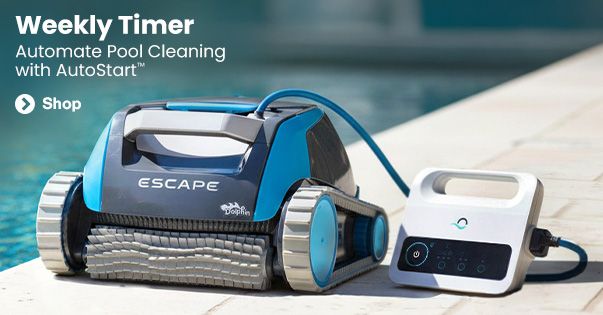
Dust that returns after every cleaning has one of three causes. The robot's filter is too coarse, so the dust is passing through: fit NanoFilters or 1-micron panels. The pool's own filter is passing it back through the returns, which is a filter-media or backwash problem. Or it is not dead: algae that is green or yellow and clings to the wall when brushed is alive, and it needs chemistry, not a robot. The Cayman and Escape fall under the first cause unless you add their optional NanoFilter panels, which is why neither is ranked here.
Dead-Algae Cleanup Tips
- Check the filter at the halfway point of the first cycle. It will probably be loaded already.
- Rinse the filters well away from the pool, so the dead algae you hose out does not wash back in.
- Keep swimmers out until the first robot pass is done; every kick puts the dust back into the water.
- Brush the walls again a day or two later and run one more cycle to catch what settles last.
Dead Algae Questions
How long after shocking can I put the robot back in?
When a test shows chlorine has dropped back into its normal range, not by the clock. That can be a day or several, depending on the dose and the sun. Robots should not sit in shock-level chlorine. Your manual gives the limits for your model, so check it before the first cycle.
Is the pale dust on my pool floor dead algae or dirt?
Timing and behavior tell you. Dead algae appears after a shock, is gray-white or tan, and lifts into a cloud at the lightest touch. Dirt and sand are heavier and fall back quickly. Either way the cleanup is the same: ultra-fine media and settled water.
Does a robotic pool cleaner for dead algae need special filters?
Yes, ultra-fine ones. The Premier and Sigma come with NanoFilters, the Quantum with NanoFilter panels and the Clear robots with 1-micron panels, all fine enough to hold it. Standard panels let much of it straight back into the pool, which is why the floor looks dusty again the next morning.
Do I still need to clean the pool filter if the robot is collecting the dead algae?
Yes. The robot only catches what it drives over. Everything still suspended in the water goes through the pool filter, which loads heavily after a shock. Backwash or clean it during the cleanup, sometimes more than once, or circulation drops and the water stays cloudy.
Still have questions? Browse our pool robot troubleshooting guides, contact our pool experts, or call (888) 615-5728

Our Verdict for Post-Shock Cleanup
Wait for the chemistry, settle the water, then let an ultra-fine filter do the work. The Premier is the easiest to rinse and re-run, which is most of this job. The Clear S is the pick for one-hour cycles and a stated 1-micron rating. Choose the Sigma for wall scrubbing, the Quantum for filter area on a budget, and the Clear UV only if you want it anyway. If the layer is thick, vacuum to waste first. Every order comes with our low price guarantee.

