













Manufacturers advise against it. The power supply should plug directly into a properly grounded GFCI outlet. Extension cords can cause voltage drop that makes the robot underperform or shut off, and they’re a safety and warranty risk around water. If you must, use only a heavy-gauge outdoor GFCI-protected cord for the shortest possible run — but a dedicated outlet is the right fix.
Why direct-to-GFCI is the rule
Your robot’s power supply is designed to plug straight into a grounded, GFCI-protected outlet. That protects against ground faults near water and delivers stable voltage to the unit. It’s both a safety requirement and how the manufacturer intends the equipment to be powered.
The problems with extension cords
- Voltage drop: a long or thin cord lowers the voltage reaching the power supply, which can make the robot sluggish, weaken suction, or cause it to stop mid-cycle.
- Safety: extra connections near water increase shock risk; a cheap indoor cord is a genuine hazard outdoors.
- Warranty: damage from improper power can be excluded from coverage.
If you have no nearby outlet
The best fix is having a licensed electrician add a GFCI outlet near the pool. If you truly must bridge a short gap temporarily, use only a short, heavy-gauge (12/14 AWG) outdoor, GFCI-protected cord — never a light indoor extension cord, and never a daisy-chain of cords.
Cord reach a constant headache?
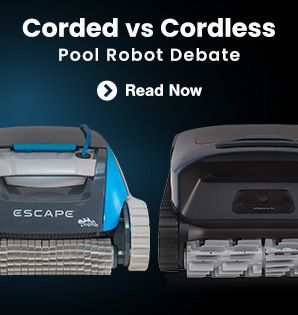
If outlet distance is a recurring problem, a cordless robot removes the cord entirely. Weigh it against corded power in our corded vs cordless guide, and browse both on our robotic pool cleaners page.