



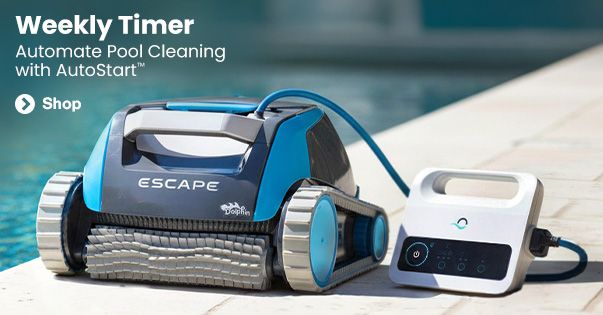







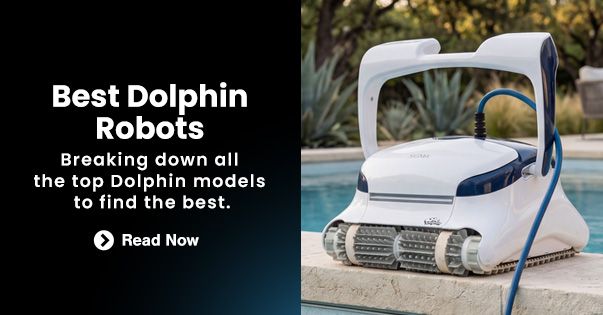




A robotic pool cleaner is a self-contained, low-voltage robot. A deck-side power supply converts household current to safe DC power; onboard motors drive the tracks and spin an impeller that pulls water and debris up through internal filters, while brushes scrub the surfaces. It works entirely independently of your pool’s pump and filter.
The core idea
Unlike suction or pressure cleaners that rely on your pool’s plumbing, a robot has its own brain, motors, and filter. That independence is why robots clean better, cost so little to run, and don’t add wear to your pump — they do everything on board.
What’s happening during a cycle
- Power supply: converts 120V household current to safe low-voltage DC and sends it down the floating cord.
- Drive motors: move the tracks or wheels so the unit navigates the floor, walls, and waterline.
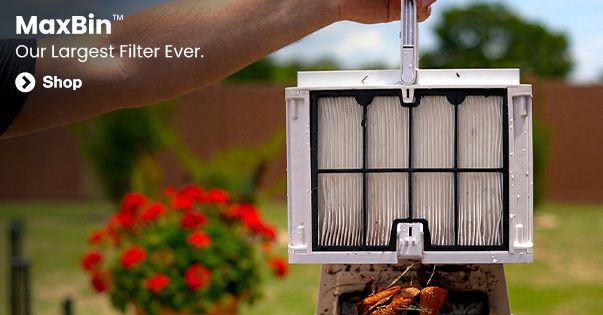
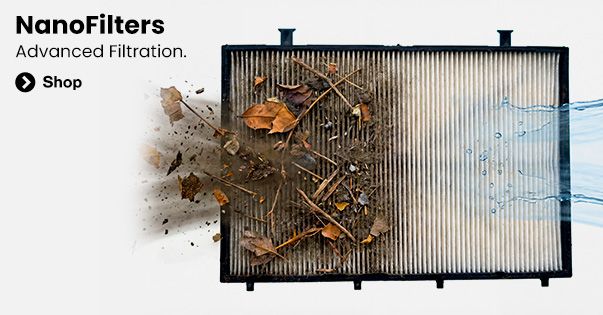
- Impeller/pump: pulls water up through the intake, trapping debris in the onboard filter and returning clean water to the pool.
- Brushes: scrub the surface to loosen dirt, algae, and biofilm so it can be sucked up.
- Navigation: basic units bump-and-turn; premium units use a gyroscope to map efficient, overlapping paths.
Corded vs cordless
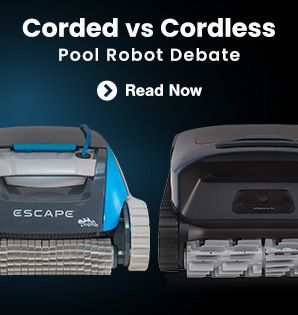
Most robots are corded (constant power, strongest suction), while newer cordless models run on a rechargeable battery for tangle-free freedom. Our corded vs cordless guide breaks down the trade-offs.
Choosing one
New to robots? Our buying guide and robot selector walk you through features and match a model to your pool — or browse them all on our robotic pool cleaners page.


