

















Indirectly, yes. By removing organic debris and algae before they break down and by circulating and mixing the water, a robot reduces the chlorine demand and helps chemicals distribute evenly — so you often use less. It won’t replace testing and balancing your water, though.
How a robot helps
- Removes organic load: leaves, pollen, and algae consume chlorine as they decompose. Filtering them out early means your sanitizer isn’t wasted fighting debris.
- Circulates the water: a robot stirs and mixes the pool as it drives, helping chemicals distribute instead of settling in dead spots and low-flow corners.
- Scrubs surfaces: brushing walls and floors disrupts the biofilm where algae takes hold, so you fight fewer blooms.
Add fine filtration for the biggest impact
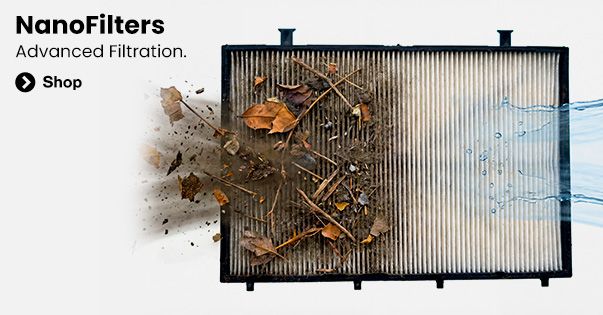
To actually remove the fine organic particles (rather than recirculating them), pair your robot with NanoFilters™. Capturing algae dust and fine debris means less chlorine burned and clearer water.
What it can’t do
A robot doesn’t test or dose chemicals — you still balance the water. But a cleaner pool with less organic load is easier and cheaper to keep balanced. Not sure which model suits your water type? The robot selector matches one to your pool, and you can compare filtration on our robotic pool cleaners page.


